Industrial silo manufacturing requires expertise ranging from structural engineering and metal fabrication to the development of solutions for loading, storing and discharging bulk materials. Choosing the right manufacturer means working with a company capable of developing storage solutions suited to specific production requirements.
Companies looking for silo manufacturers or specialists in silo construction generally need to create a new storage solution, expand existing capacity or find a product suitable for particular operating conditions.
Let’s explore the main stages of silo manufacturing, the available construction options and the industrial expertise of Poggi S.p.A.
Industrial Silo Manufacturing: From Design to Production
Silo manufacturing is a multi-stage process that begins with an analysis of storage requirements and ends with the production of a structure designed for specific operating conditions.
Its design must consider the material being stored, the required capacity, expected loads, filling and discharge methods, environmental conditions and connections to other equipment.
The main stages of silo fabrication include:
- Requirements analysis: identifying the material, storage capacity and operating conditions.
- Engineering: defining dimensions, geometry, structural characteristics and accessories.
- Metal processing: cutting, bending and preparing structural components.
- Welding and assembly: manufacturing the structure according to the technical specifications.
- Surface treatments: applying finishes and protective coatings suited to the application.
- Quality control: checking dimensions and manufacturing quality.
- Delivery preparation: planning transport and any necessary on-site assembly.
Silo Manufacturers in Italy: Experience, Technology and Production Capabilities
Among silo manufacturers in Italy, industrial experience, engineering expertise and manufacturing technologies play an important role in meeting the requirements of bulk material storage.
Founded in 1945, Poggi S.p.A. has developed extensive expertise in metalworking and industrial silo construction, combining decades of manufacturing experience with technological innovation.
Engineering and Customization
Engineering is essential to silo construction. Dimensions, capacity, loads, material characteristics and site conditions must be evaluated before manufacturing begins.
Poggi develops different configurations to meet the storage requirements of industrial customers, taking into account both technical specifications and operating conditions.
Manufacturing Technologies
The company’s manufacturing facilities use laser cutting, CNC plasma systems, automated welding technologies and equipment for handling large metal structures.
These capabilities support the production of different silo configurations and the execution of complex metal fabrication operations.
Quality and Certifications
Poggi operates under a quality management system certified to UNI EN ISO 9001:2015 and holds additional certifications relating to welding and structural manufacturing activities within their respective scopes.
Quality controls accompany the different production stages, from component preparation to structural fabrication.
What Types of Silos Does Poggi Manufacture?
Industrial silo manufacturing includes different construction configurations depending on storage capacity, material characteristics, transport requirements and installation conditions.
Monolithic Vertical Silos
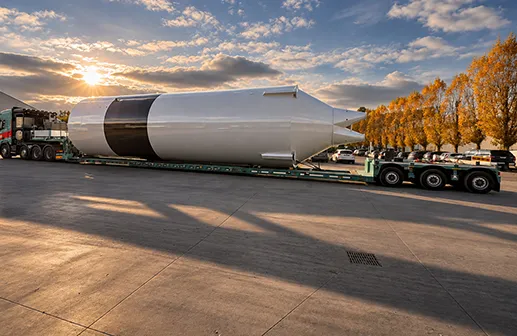
Monolithic vertical silos are manufactured as complete welded structures, reducing the assembly work required for the main body at the destination site.
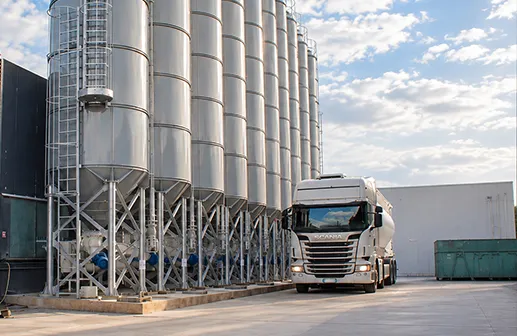
They are used for storing cement, lime, dry mixes and other bulk materials in various industrial applications.
Discover Poggi monolithic vertical silos.
Bolted Panel Silos
Bolted panel silos consist of structural components manufactured at the production facility and subsequently assembled on site.
The modular configuration makes them particularly suitable for large storage capacities and projects where transporting a complete silo would be difficult.
Telescopic Silos
Telescopic silos are designed to reduce transport dimensions and allow the structure to be extended into its operating configuration after delivery.
They are suitable for applications where logistics and installation requirements influence the choice of storage solution.
Horizontal Silos
Horizontal silos provide an alternative configuration where height restrictions, handling requirements or changes to the working area must be considered.
Poggi manufactures different horizontal silo solutions for bulk material storage and handling.
Explore the Poggi vertical silo range to learn more about the available configurations.
Custom Silo Manufacturing
Not every industrial storage requirement can be met with a standard product. Custom silo manufacturing allows different characteristics to be adapted to the intended application.
Customization may include:
- Storage capacity and overall dimensions.
- Structural geometry and construction materials.
- Loading and discharge openings.
- Filtration, level monitoring and safety accessories.
- Weighing and material control systems.
- Surface treatments and protective coatings.
- Connections to hoppers and material handling equipment.
- Specific transport and installation requirements.
Poggi combines engineering expertise and manufacturing capabilities to develop configurations suited to different materials and industrial applications.
Silo Manufacturing and Transport
Silo transport is an important consideration during the manufacturing process, especially for large structures intended for international destinations.
The dimensions and geometry of a silo influence the choice of transport methods, handling equipment and delivery planning.
Monolithic silos are transported as complete structures, while bolted panel silos can be shipped in separate components and assembled at their destination.
Transport requirements may therefore influence the most appropriate construction configuration from the earliest project stages.
What Information Is Needed to Design a Silo?
Before starting a new silo project, several basic requirements must be identified:
- Material: type and physical characteristics of the product to be stored.
- Capacity: required storage volume or quantity.
- Application: industrial sector and intended use.
- Available space: height, width and accessibility restrictions.
- Filling system: method used to load material into the silo.
- Discharge system: connection to subsequent processing stages.
- Accessories: filtration, weighing, monitoring and safety equipment.
- Location: installation conditions and transport requirements.
These details provide the basis for evaluating the most suitable storage configuration.
Poggi S.p.A.: Industrial Silo Manufacturing in Italy Since 1945
Poggi S.p.A. has been manufacturing products for bulk material storage and handling since 1945.
Its production facilities are located in the Casentino area, in the province of Arezzo, Tuscany. The company develops products for construction, agriculture, food processing, environmental management, chemical applications and other industrial sectors.
Its product range includes monolithic vertical silos, bolted panel silos, telescopic silos and horizontal silos, together with components and accessories for material storage and handling.
With an established international presence, Poggi combines industrial experience, engineering expertise and manufacturing capabilities to meet different storage requirements.
Why Choose Poggi for Industrial Silo Manufacturing?
Choosing Poggi means working with an Italian manufacturer with extensive experience in silo fabrication and bulk material storage solutions.
From monolithic silos to large bolted panel structures, the company develops products according to material characteristics, required capacity and operating conditions.
The Poggi team is available to discuss new projects, storage capacity expansions and customized solutions.
Contact Poggi to request information or a quotation for your storage project.
Frequently Asked Questions About Silo Manufacturing
Which companies manufacture silos in Italy?
Poggi S.p.A. is an Italian industrial silo manufacturer established in 1945, producing vertical, horizontal, monolithic, bolted panel and telescopic silos.
Can I request a custom-manufactured silo?
Yes. Poggi develops customized configurations according to the material, storage capacity, available space and operating requirements.
What types of silos does Poggi manufacture?
Poggi manufactures monolithic vertical silos, bolted panel silos, telescopic silos and horizontal silos.
How is silo transport organized?
Transport requirements are evaluated according to dimensions, weight, destination and handling conditions. The silo configuration may be adapted to logistical requirements.
Where are Poggi silos manufactured?
Poggi silos are manufactured in Italy, in the Casentino area of Tuscany, in the province of Arezzo.