How Do You Fill a Silo? Loading and Safety
Silo filling is a fundamental stage in bulk material handling. Cement, lime, fly ash, premixed materials and other powdered or granular products must be transferred into storage vessels using systems designed according to the characteristics of the material and the installation.
But how do you fill a silo, and which devices ensure that loading operations are carried out safely? In addition to transferring the material, it is essential to manage the air inside the silo, internal pressure, dust emissions and filling levels.
Let’s examine how silo loading works, which technologies are used and the main safety systems involved, taking the solutions available for Poggi vertical monolithic silos as a reference.
How Do You Fill a Silo?
A silo can be filled using different conveying systems, selected according to the material being stored, the distance from the feeding point and the characteristics of the installation.
For powdered materials such as cement and lime, one of the most widely used solutions is pneumatic loading: the material is transported by an airflow through a pipeline into the silo.
In other applications, mechanical conveying systems, such as screw conveyors and bucket elevators, transfer material from the feeding point to the storage vessel.
The filling system must be designed considering not only the material flow rate but also operating pressures, dust characteristics and air filtration capacity.
For a broader overview of the other operating stages, you can also read our article on how a storage silo works.
Pneumatic Silo Filling: How Does It Work?
Pneumatic conveying transfers powdered materials using moving air inside a pipeline. This solution is particularly common in concrete batching plants and industrial applications involving the storage of cement, lime and other powdered products.
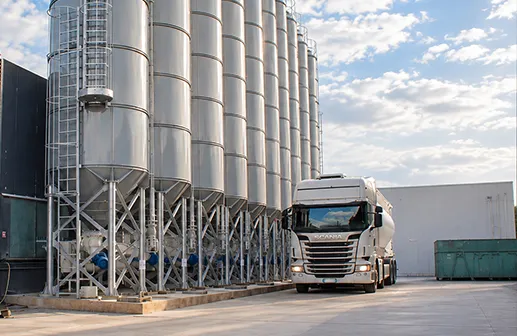
When loading from a bulk tanker truck, the material is transferred through a conveying line connected to the silo filling pipe.
The process generally involves the following stages:
- Connection: the conveying pipeline is connected to the silo filling inlet.
- Operating condition checks: connections and the devices required to authorize loading are checked.
- Pneumatic transfer: the material is conveyed into the silo through the pipeline.
- Air filtration: the dust collector retains solid particles contained in the vented air.
- Filling level monitoring: level indicators and safety devices help manage the loading operation.
- Completion of loading: material transfer is stopped according to the procedures established for the installation.
During the process, the air used to transport the material must be able to escape through an appropriately designed filtration system. Otherwise, internal pressure may increase and compromise operating safety.
What Are the Main Components of a Silo Loading System?
A silo loading system includes several components working together to ensure proper material transfer and control of operating conditions.
Filling Pipe
The filling pipe provides the connection through which material enters the silo. In pneumatic loading applications, it must be compatible with the product characteristics and the expected pressure and flow conditions.
Proper pipeline configuration helps limit pressure losses and supports consistent material transfer.
Butterfly Valve
The butterfly valve allows the flow of material through the loading line to be opened or interrupted.
In Poggi monolithic silos equipped with a safety system that monitors the loading connection, valve opening depends on the correct completion of the connection procedure and authorization from the control panel.
Dust Collector
The silo dust collector, generally installed on the silo roof, separates solid particles from the vented air generated during pneumatic loading.
Filtration helps reduce dust emissions into the surrounding environment while managing the air introduced during material transfer.
The type of filter must be selected according to the material characteristics, particle size distribution and operating conditions of the installation.
To learn more about this component, read our article on what a dust collector is and how it works.
Level Indicators
Silo level indicators detect when specific filling thresholds are reached.
A high-level indicator is particularly important during loading because it provides a signal when the material reaches a predetermined level.
This signal can be integrated into the plant control logic to activate warnings or stop loading, depending on the system configuration.
Which Safety Systems Protect a Silo During Filling?
Silo filling safety mainly involves pressure control, overfilling prevention, dust management and the correct execution of loading operations.
A malfunction in the conveying line or filtration system can create unexpected operating conditions. For this reason, protective devices must be designed as an integral part of the installation.
Connection Verification Before Loading
In Poggi monolithic silos equipped with this safety system, the operator connects the filling pipe by operating a handle.
This operation activates an indicator on the control panel. Only after the connection has been correctly completed can the butterfly valve be authorized to open and material transfer started.
This procedure helps prevent loading operations from starting before the necessary conditions have been met.
Overpressure and Vacuum Protection
During pneumatic loading, the air entering the silo must be properly managed. If the filtration system becomes clogged or cannot discharge air under the expected operating conditions, internal pressure may increase.
Similarly, certain operating conditions can create a vacuum, meaning that the internal pressure falls below the external atmospheric pressure.
A pressure and vacuum relief valve is a mechanical device designed to help protect the silo against excessive pressure differences, within the limits established by the design.
Poggi’s Two-Level Silo Safety System
Poggi vertical monolithic silos can incorporate a two-level safety system designed to protect the silo against excessive positive or negative pressure.
The system provides two levels of intervention:
- First level – electronic control: if the filter becomes clogged, an electronic pressure detector automatically stops loading by closing the butterfly valve.
- Second level – mechanical protection: if the first device fails to operate correctly, a mechanical system allows the internal silo pressure to be balanced.
This configuration combines electronic process control with an additional mechanical protection system.
The operating characteristics and intervention thresholds must be defined according to the silo configuration and the expected operating conditions.
Overfilling Prevention
In addition to pressure, it is necessary to monitor the amount of material entering the silo.
A high-level sensor detects when a predetermined filling threshold has been reached. When integrated with the control system, it can help stop loading before the permitted level is exceeded.
Overfilling prevention must also account for the material still present in the pipeline when conveying is stopped.
For more information about other available devices, read our article on silo accessories and their functions.
Why Is a Dust Collector Important During Silo Loading?
During pneumatic silo filling, a significant amount of air enters the silo together with the material.
This air must be discharged, but it may contain dust particles that should not be released into the surrounding environment.
The dust collector therefore performs two essential functions:
- Dust separation: it retains solid particles carried by the outgoing air.
- Air management: it allows air to be discharged under the operating conditions established for the system.
An incorrectly sized or clogged filter can interfere with proper airflow management and cause internal pressure to rise.
For this reason, filtration should not be considered only an emission control measure, but also an important component in the operational management of silo loading.
Filling Silos with Mechanical Conveying Systems
Pneumatic loading is not the only available solution. Depending on the material and installation layout, filling can also be carried out using mechanical conveying systems.
Common technologies used in the industry include:
- Screw conveyors: move bulk materials using a rotating screw inside an enclosed structure.
- Bucket elevators: enable vertical lifting of granular materials and certain other bulk products.
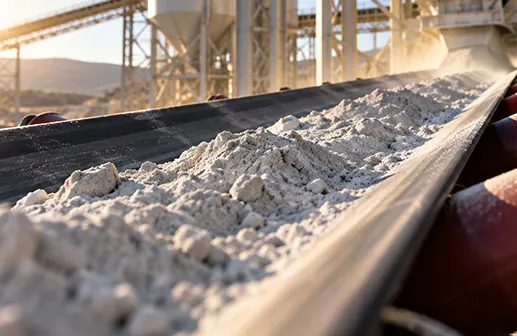
- Belt conveyors: are mainly used for granular materials and other products suitable for belt transportation.
The choice depends on particle size, bulk density, flowability, material abrasiveness and conveying distance.
These technologies represent general methods of silo filling and are not necessarily standard equipment on all Poggi silo models.
How Is the Amount of Material Entering a Silo Monitored?
Filling operations can be monitored using level indicators or weighing systems.
Level indicators detect when certain thresholds are reached or, with dedicated systems, continuously monitor the material level.
Weighing systems, on the other hand, may use load cells installed on the structural supports to detect changes in the mass of the stored material.
Poggi silos can be equipped with electronic weighing systems that display data on digital terminals and, upon request, provide remote monitoring and traceability of loading and unloading cycles.
It is important to remember that material level and mass are not equivalent measurements: materials with different bulk densities can occupy the same volume while having different masses.
To understand the applications of this technology, read our article on what load cells are used for in industrial weighing systems.
How Can Silo Filling Efficiency Be Improved?
The efficiency of industrial silo loading depends on the integration of conveying equipment, pipelines, filtration and monitoring devices.
Key aspects to consider include:
- Compatibility between the material and the conveying system.
- Required loading capacity.
- Proper sizing of the filling pipeline and dust collector.
- Internal pressure management.
- High-level monitoring.
- Accessibility of components for inspection and maintenance.
- Integration with plant automation systems.
For specific applications, Poggi silos can also be configured with a dual filling pipe, allowing material to be introduced from two separate points and potentially improving operational flexibility.
Any actual reduction in loading time depends on the overall plant configuration and the capacity of the conveying and filtration systems.
Filling and Safety in Poggi Vertical Monolithic Silos
Poggi vertical monolithic silos in the SZ, SM and SB series are designed for storing powdered and granular bulk materials, including cement, lime, fly ash and premixed products.
Manufactured with a single welded body assembled at the factory, they can be configured with specific accessories for loading, filtration, level monitoring and operational safety.
Available components include the filling pipe, dust collector, level indicators, pressure and vacuum relief valve, and control systems.
The possibility of customizing these components allows the silo configuration to be adapted to the material characteristics and plant requirements.
Once filling is complete, the stored material must be made available for subsequent production stages. To learn more about this process, read our article on how to empty a silo.
To evaluate the most suitable configuration for your production process, you can contact the Poggi technical team.
Frequently Asked Questions About Silo Filling
How Is Cement Loaded into a Silo?
Cement is commonly transferred using pneumatic conveying, for example from a bulk tanker truck connected to the silo filling pipe. During the operation, the conveying air is managed through the silo filtration system.
Why Does Pressure Increase During Silo Filling?
During pneumatic loading, air enters the silo together with the material. If this air cannot be discharged correctly, for example because of a clogged filter, internal pressure may increase.
What Is the Purpose of a Pressure and Vacuum Relief Valve?
A pressure and vacuum relief valve is a mechanical device that helps protect the silo against excessive pressure differences relative to the surrounding atmosphere, according to the limits established by the design.
How Can Silo Overfilling Be Prevented?
By using high-level monitoring systems and automatic loading shutdown logic, properly designed and integrated into the installation.
Can Silo Filling Be Monitored Remotely?
Yes. Control and monitoring systems can be integrated with digital interfaces and remote monitoring solutions, depending on the selected configuration.
Can a Silo Be Filled Without Pneumatic Conveying?
Yes. In certain applications, mechanical conveying systems such as screw conveyors, bucket elevators or belt conveyors can be used, depending on the material and plant requirements.