The quality of an industrial product depends on its design, the materials used and the technologies employed, but also on the ability to transform steel correctly into structures and components designed to perform reliably over time.
This is where industrial metal fabrication plays a fundamental role. Cutting, bending, welding, assembly and quality control are not simply separate production stages, but parts of a process that determines the precision, strength and reliability of the finished product.
What is industrial metal fabrication?
Industrial metal fabrication includes the processes required to transform metal elements into structures, components and products intended for industrial applications.
It is a broad field that begins with the interpretation and development of a design and continues through different manufacturing processes until the structure is assembled. Dimensions, geometries, thicknesses and construction characteristics vary according to the product being manufactured and the conditions in which it will operate.
To explore the main characteristics and types in greater detail, read our article on what is meant by metal fabrication.
In industrial production, the value of metal fabrication lies above all in the ability to maintain consistency between design and manufacturing. A correctly designed structure must be transformed into a product that complies with the specified geometries, tolerances and technical characteristics.
What are the main metal fabrication processes?
Metal fabrication processes include a range of operations used to transform raw material into the components required to manufacture the finished product.
The process may include cutting sheets and profiles, bending, rolling, component preparation, welding, finishing and assembly. The sequence of operations depends on the geometry and technical characteristics of the product being manufactured.
Correct metal fabrication requires each stage to be consistent with the previous and subsequent operations. A component manufactured with incorrect dimensions or geometries can affect subsequent welding and assembly operations and, consequently, the overall quality of the finished product.
From design to steel processing
Before production begins, the configuration of the product and its individual components is defined. The design phase must take into account dimensions, loads, operating methods and the expected working conditions.
The design is then translated into the manufacturing processes required to produce the different metal components. Cutting, bending and rolling make it possible to obtain the shapes and geometries that will subsequently be joined together to create the finished product.
Precision at this stage is particularly important when manufacturing large products or structures consisting of numerous components, where each element must integrate correctly with the others.
Structural metal fabrication and product strength
When metal components contribute directly to the strength and stability of a product, structural metal fabrication becomes particularly important.
A metal fabricated structure must be designed and manufactured taking into account the loads and stresses to which it will be subjected during operation. This is especially important for products designed to store large quantities of bulk materials or to operate under demanding conditions.
The quality of structural metal fabrication therefore depends not only on the characteristics of the steel used, but also on the precision of the manufacturing processes, the correct execution of welds and the control of the entire production process.
Why is welding a fundamental stage?
Welding permanently joins the different elements that make up a metal structure and is therefore one of the most important stages in the manufacture of many industrial products.
Weld quality affects the continuity and strength of the joints and must be consistent with the structural characteristics defined during the design phase.
In industrial processes, welding can be carried out using different technologies and levels of automation depending on the geometry, dimensions and repeatability of the components. The objective remains to achieve reliable joints and consistent quality over time.
Metal fabrication assembly: when components become a product
Once the individual elements have been manufactured, metal fabrication assembly transforms the components into a complete structure.
This is a stage where the precision of the previous processes becomes immediately apparent: correctly manufactured elements facilitate fitting, positioning and final assembly.
In complex industrial products, assembly must also take into account integration with mechanical components, extraction systems, accessories, weighing systems and other elements required for the product to operate correctly.
Quality control and certified metal fabrication
The quality of a metal structure cannot depend solely on manufacturing experience. Procedures, inspections and qualifications make the production process verifiable and repeatable.
Certified metal fabrication is carried out through processes in which materials, manufacturing operations, regulations and welding are managed according to defined requirements and procedures.
This approach is particularly important in the production of structures and components intended for industrial applications, where reliability, safety and durability must be considered from the design stage onwards.
From metal fabrication to industrial silos
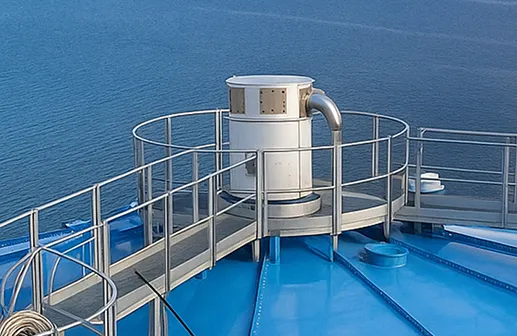
A silo clearly demonstrates how metal fabrication affects the finished product. The cylindrical body, hopper, support structure and numerous connecting elements are produced through different steel fabrication processes that must come together in a single product.
Dimensions and capacities can also vary considerably depending on the application. The precision of manufacturing and assembly therefore becomes essential both for monolithic silos and for larger structures manufactured using modular elements.
Expertise in metal fabrication is therefore one of the manufacturing foundations required to produce storage systems for cement, lime, fly ash, aggregates, industrial powders and many other bulk materials.
Metal fabrication and bulk material handling
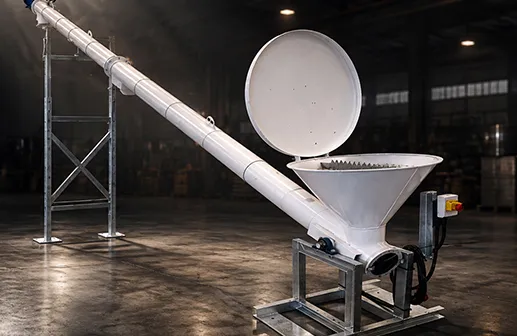
The same principle does not apply only to silos. Hoppers, support structures, belt conveyors and other material handling products also require metal components designed and manufactured according to the specific application.
In these cases, metal fabrication must integrate with mechanical parts and material handling systems. The structure is therefore not an independent element, but the foundation on which the other components of the product are installed and operate.
The ability to manage design, fabrication, welding and assembly in-house also makes it possible to develop different configurations according to the available space, material characteristics and process requirements.
Why does metal fabrication quality affect the finished product?
A good design is the starting point, but it must be supported by equally accurate manufacturing. Dimensional precision, weld quality, correct assembly and control of the different production stages all contribute directly to product performance.
For this reason, metal fabrication should not be considered simply as steel processing, but as an integral part of the process through which an industrial design becomes a finished product.
This is the principle on which Poggi has developed its manufacturing expertise over time: starting from design and metal fabrication to create products and solutions for the storage and handling of bulk materials.