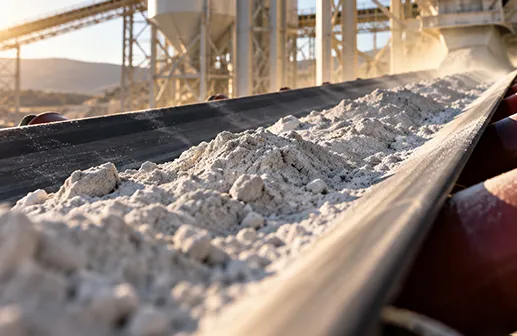
Hoppers are containers used to receive, temporarily hold and feed bulk materials into a production process in a controlled manner.
They are used in many sectors, including concrete production, precast manufacturing, recycling, agriculture, biomass processing and plastic material handling.
However, not all hoppers perform the same function. Their configuration must be defined according to the material being handled, the loading system, the required capacity, the desired flow rate and the level of accuracy needed during extraction or dosing.
What is an industrial hopper?
An industrial hopper is a container generally equipped with an upper loading section and a sloped bottom that directs the material towards one or more discharge outlets. It plays an important role, for example, in aggregate storage and material dosing.
Its internal geometry uses gravity to facilitate the flow of materials such as:
- sand, gravel and aggregates;
- inert and recycled materials;
- cereals, seeds and flour;
- fertilisers and compost;
- pellets, biomass and wood chips;
- plastic granules and flakes;
- premixed products and other bulk materials.
The hopper can be connected to belt conveyors, screw conveyors, weighing systems, dosing devices and automated material handling lines.
Compared with a silo, which is normally used to store larger quantities of material for longer periods, a hopper is mainly used as a receiving point, intermediate buffer and process feeding unit. Silos and hoppers can therefore perform complementary functions within the same production system.
How are hoppers classified?
The different types of hoppers can be classified according to their function, discharge method, construction configuration and the material they are designed to handle.
The main types include:
- receiving hoppers;
- feeding hoppers;
- in-line hoppers;
- primary hoppers;
- dosing hoppers;
- vibrating hoppers;
- modular or multi-compartment hoppers.
These categories are not necessarily separate. The same hopper can, for example, receive material, feed a belt conveyor and simultaneously carry out weighing or dosing operations.
Receiving hoppers
A receiving hopper is the initial entry point for material into a production line.
It can be loaded using a wheel loader, truck, belt conveyor or another material handling system. The collected product is then directed towards subsequent conveying, processing, mixing, dosing or storage stages.
Receiving hoppers are frequently used for:
- aggregates and inert materials;
- sand and gravel;
- demolition materials;
- compost and fertilisers;
- cereals and seeds;
- pellets and biomass;
- plastic granules.
The structure must be sized according to the loading method, particle size, bulk density, moisture content and abrasiveness of the material.
Feeding hoppers
A feeding hopper regulates the entry of material into a machine or a subsequent process stage.
Its function is to ensure a regular flow while reducing interruptions, overloads and excessive variations in throughput.
It can directly feed:
- belt conveyors;
- mixers;
- crushers;
- dosing systems;
- sorting lines;
- automated processing systems.
The hopper geometry and extraction system must be selected according to the characteristics of the material and the required flow rate.
In-line hoppers
In-line hoppers are installed within the production process to ensure continuous and controlled feeding to belt conveyors or dosing systems.
Poggi TR Series in-line hoppers consist of an upper storage section and a lower extraction or weighing system.
The independent operation of the two sections allows material to continue being loaded even while dosing is taking place. This reduces interruptions and improves continuity throughout the following process stages.
TR Series hoppers can be configured with:
- a galvanised or painted steel body;
- a hot-dip galvanised supporting structure;
- a weighing belt;
- pneumatic discharge gates;
- vibrators or impact hammers;
- different dimensions and capacities;
- several adjacent hopper units.
The Poggi catalogue includes configurations ranging from one to six hoppers, with capacities varying according to the width and height of the structure.
Primary hoppers
Primary hoppers are installed at the beginning of the process and are designed to receive large quantities of material.
They are generally loaded using a wheel loader and provide an initial accumulation point before the material is transferred to in-line hoppers or subsequent production stages.
Poggi TRP Series primary hoppers are designed for intensive operating conditions and for handling materials requiring high mechanical strength.
They can be equipped with:
- thick steel plates and structural reinforcements;
- an extractor belt;
- pneumatic discharge gates;
- load cells;
- vibrators or impact hammers;
- internal linings;
- level monitoring systems.
They are suitable for handling aggregates, inert materials, recycled materials, compost, biomass and even large-sized granular products.
Dosing hoppers
A dosing hopper does more than temporarily hold material. It also controls the quantity delivered to the next stage of the process.
Dosing can mainly be carried out through timed systems or load-cell weighing systems.
Timed dosing
With timed dosing, the supplied quantity is calculated according to the operating time and nominal flow rate of the extraction system.
This solution is suitable for homogeneous materials and continuous production processes where maintaining a constant flow is more important than achieving absolute weighing accuracy.
Dosing with load cells
Load cells measure the weight of the material contained in or extracted from the hopper.
The integration of weighing systems enables more accurate control of:
- production recipes;
- handled quantities;
- process repeatability;
- batch traceability;
- product or production process certification.
Poggi hoppers can incorporate load cells and extractor belts to provide continuous and controlled electronic dosing.
Hoppers with belt conveyors
A belt conveyor is one of the most widely used systems for extracting material from a hopper and transferring it to the next processing stages.
Two main configurations are available.
Extraction with a direct-contact belt
In this configuration, the material rests directly on the belt conveyor, without intermediate gates or closing devices.
The movement of the belt determines the outgoing flow rate and ensures continuous and regular discharge.
This configuration simplifies the mechanical structure and is suitable when a constant flow or accurate material weighing is required.
Extraction through pneumatic discharge gates
The material is discharged by gravity through one or more gates located above the belt conveyor.
The openings can be pneumatically operated to control material discharge and distribute it to different points along the line.
This configuration enables greater flow regulation and independent management of several hoppers or compartments.
Vibrating hoppers
Vibrating hoppers are used when the material does not flow easily.
Wet, cohesive, compacted or sticky products can form bridges, static arches, deposits or build-ups on the internal walls.
To improve material flow, the hopper can be equipped with:
- electric vibrators;
- pneumatic vibrators;
- impact hammers;
- selective vibration systems.
Vibrators transmit continuous or intermittent forces to the structure. Impact hammers, on the other hand, generate localised blows to detach specific material build-ups.
The most suitable solution must be selected according to the hopper geometry, the nature of the material and the operating conditions.
Modular and multi-compartment hoppers
A modular hopper makes it possible to adapt the capacity and configuration to the characteristics of the production area.
When several materials need to be handled, multiple hoppers can be installed side by side, or a single structure can be divided into independent compartments.
This configuration is useful for:
- separating different types of aggregates;
- handling different particle sizes;
- feeding recipes made from several materials;
- optimising the available space;
- controlling each discharge point separately.
Each compartment can be equipped with its own extraction, weighing, vibration and monitoring system.
Hoppers for aggregates and inert materials
Aggregate hoppers are designed to contain and feed sand, gravel, crushed stone and other materials used in concrete production and precast manufacturing.
In these applications, the structure must withstand high loads, impacts during filling and wear caused by abrasive materials.
The hoppers can be combined with extractor belts, weighing belts or pneumatic gates to regulate the feeding of different components.
They can also incorporate moisture sensors, which are particularly useful when the water content of the aggregates affects the composition of the final mix.
Hoppers for granular materials
The temporary storage of granular materials requires internal geometries that facilitate product movement and reduce the formation of stagnant areas.
Hoppers can be used for:
- plastic granules;
- pellets;
- seeds;
- fertilisers;
- dry food products;
- flakes and other small-sized materials.
Depending on the characteristics of the product, internal linings can be applied to protect the surfaces, reduce friction and improve the flow towards the outlet.
Materials and internal linings
Industrial hoppers can be manufactured from galvanised steel, painted steel or other materials selected according to the application.
The choice depends on the product being handled, the installation environment and the required resistance to wear or corrosion.
Specific internal linings can be installed for particularly abrasive or difficult-to-handle materials. These components:
- protect internal surfaces;
- reduce wear;
- minimise friction;
- prevent deposits and build-ups;
- facilitate complete hopper emptying.
Control and automation
Industrial hoppers can be integrated into automated systems through sensors, load cells and digital interfaces.
The main available functions include:
- fill-level monitoring;
- continuous weight measurement;
- moisture detection;
- automatic vibrator activation;
- remote control;
- operating data recording;
- report generation;
- integration with Industry 4.0 systems.
Poggi hoppers can also be equipped with remote data transmission systems, making it easier to plan feeding cycles and monitor residual material quantities.
How do you choose the right hopper?
Capacity is not the only factor to consider when selecting a hopper.
It is also necessary to evaluate:
- the nature and particle size of the material;
- bulk density;
- moisture content;
- abrasiveness or corrosiveness;
- loading method;
- extraction flow rate;
- dosing accuracy;
- available space;
- environmental conditions;
- required level of automation.
A detailed process analysis makes it possible to identify the most suitable geometry, construction materials, discharge system and accessories.
Accessibility should also be considered during the design stage. A correctly configured structure simplifies inspection, cleaning and maintenance operations, reducing downtime.
Poggi hoppers for bulk material handling
Poggi designs TR Series in-line hoppers and TRP Series primary hoppers customised according to the characteristics of the material and the customer’s operational requirements.
The solutions can incorporate extractor and weighing belts, load cells, pneumatic gates, vibrators, impact hammers, level and moisture sensors, internal linings and digital monitoring systems.
Hopper design therefore concerns not only the container itself, but also its correct integration into bulk material receiving, feeding, dosing and handling processes.
For more information about Poggi hoppers, click the link. Primary industrial hoppers for aggregates